Certification Standards Applied by Independent Labs to Verify Random Number Generator Integrity in State-Approved Electronic Gaming Machines
Amir Powell · Jul 8, 2026
Certification Standards Applied by Independent Labs to Verify Random Number Generator Integrity in State-Approved Electronic Gaming Machines
Independent laboratories apply rigorous certification standards to confirm that random number generators in state-approved electronic gaming machines produce outcomes meeting regulatory requirements for fairness and unpredictability, and these processes involve multiple layers of statistical evaluation along with source code analysis. Regulators in various jurisdictions mandate such verification before machines receive approval for commercial deployment, while updates to testing protocols continue to reflect advances in computational methods and security practices.
Core Requirements for RNG Certification
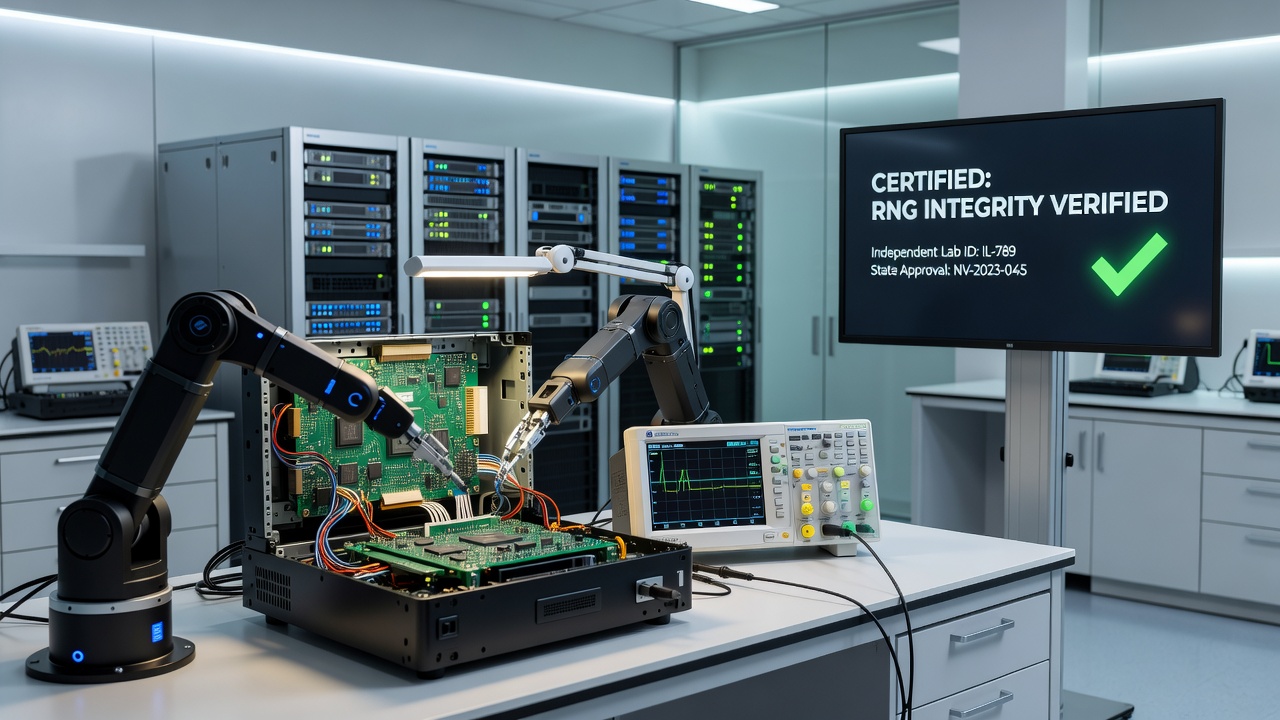
Certification begins with an examination of the RNG's mathematical foundation, where labs assess whether the generator satisfies criteria for statistical randomness, and this includes evaluations against established benchmarks such as those outlined in NIST Special Publication 800-90A for deterministic random bit generators. Independent facilities review both hardware and software components to verify that sequences remain free from detectable patterns, and they conduct extensive runs of millions of trials to measure distribution uniformity across possible outcomes.
State gaming authorities typically reference standards developed by organizations like Gaming Laboratories International or BMM Testlabs when issuing approvals, and these frameworks specify test suites that cover periodicity, correlation, and entropy levels. Observers note that machines must demonstrate consistent performance under simulated operational stresses, including power fluctuations and network interruptions, before receiving clearance for use in regulated environments.
Testing Methodologies Employed by Labs
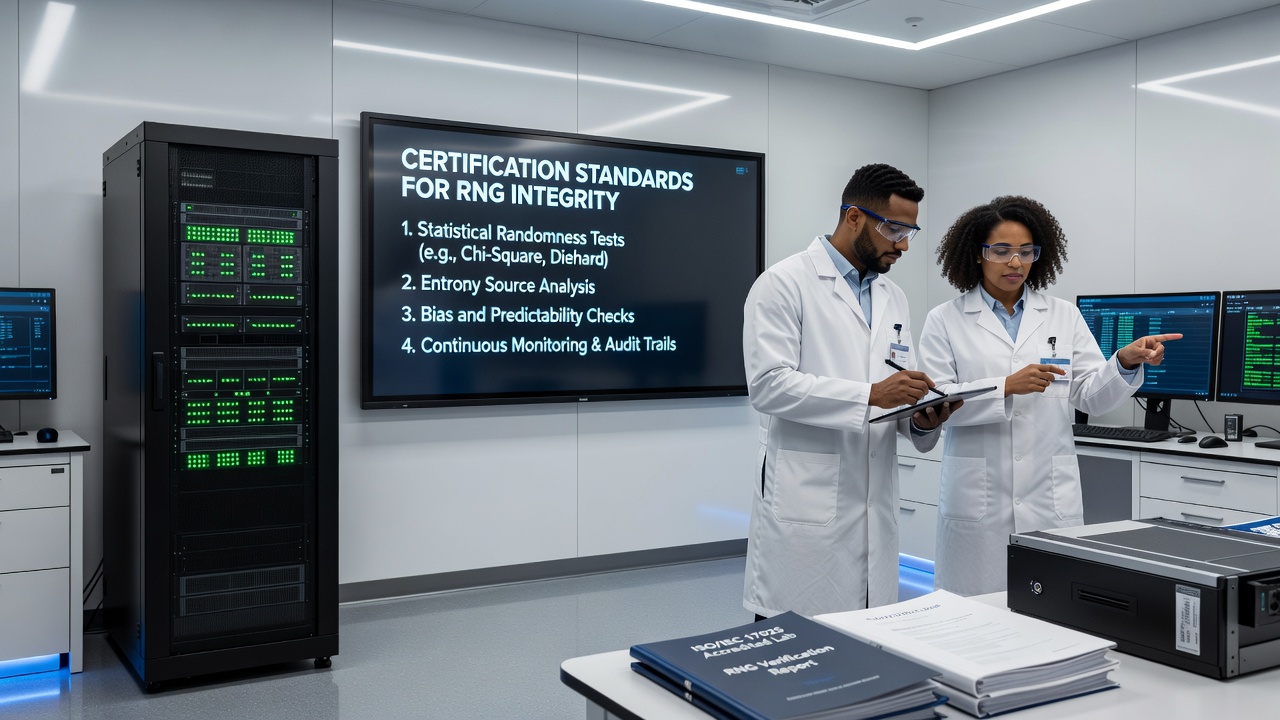
Laboratories apply suites of statistical tests including the Diehard battery and the NIST Statistical Test Suite to probe sequence quality, and they supplement these with custom evaluations tailored to gaming-specific requirements such as symbol distribution across reel strips. Source code audits form another critical component where reviewers examine implementation details to rule out hidden biases or predictable seeding mechanisms, while hardware security modules undergo inspection for physical tampering resistance.
Certification reports document each test result with quantitative metrics, and states require these documents as part of the approval dossier submitted by manufacturers. In July 2026 several jurisdictions plan to incorporate enhanced entropy assessments that account for emerging quantum-resistant algorithms, reflecting ongoing evolution in the field. Data from regulatory filings shows that rejection rates for initial submissions often exceed 20 percent due to failures in long-sequence randomness checks.
Regional Variations in Standards Application
North American states maintain distinct yet overlapping certification pathways, whereas Canadian provincial regulators coordinate through bodies such as the Alcohol and Gaming Commission of Ontario to align testing criteria across borders. Australian authorities apply similar principles through state-level gaming commissions that reference international lab reports when evaluating imported equipment, and this cross-jurisdictional recognition helps manufacturers streamline compliance efforts.
One study by the Alcohol and Gaming Commission of Ontario revealed that certified RNGs maintained outcome integrity across extended operational periods exceeding 18 months in field deployments. European frameworks emphasize additional cryptographic validation steps that complement core randomness checks, and these requirements influence global lab practices even when machines target non-European markets.
Ongoing Monitoring and Recertification Processes
After initial approval, regulators mandate periodic re-testing at intervals determined by machine type and jurisdiction, and independent labs perform these audits to detect any drift in generator performance caused by firmware updates or component aging. Manufacturers submit change notifications whenever modifications occur, triggering abbreviated review cycles that focus on affected modules rather than full re-certification.
Figures from industry reports indicate that recertification volumes have increased steadily since 2023 as more jurisdictions adopt centralized reporting systems, and this trend supports faster identification of anomalies across distributed machine fleets. Labs maintain accredited status through regular peer reviews and proficiency testing programs administered by standards organizations, ensuring consistency in evaluation methods.
Conclusion
Certification standards applied by independent labs establish verifiable benchmarks that state regulators rely upon when approving electronic gaming machines for public use, and these processes integrate statistical analysis, code review, and hardware validation into unified assessments. Continued refinement of testing protocols, including those scheduled for implementation around July 2026, addresses new technological considerations while preserving core requirements for outcome integrity. Data compiled by oversight agencies demonstrates that adherence to these standards correlates with sustained compliance in operational settings across multiple regions.