Tracing the Lineage of Encrypted Random Number Protocols and Their Ties to 18th-Century Probability Tables
Gisela Krüger · Jul 15, 2026
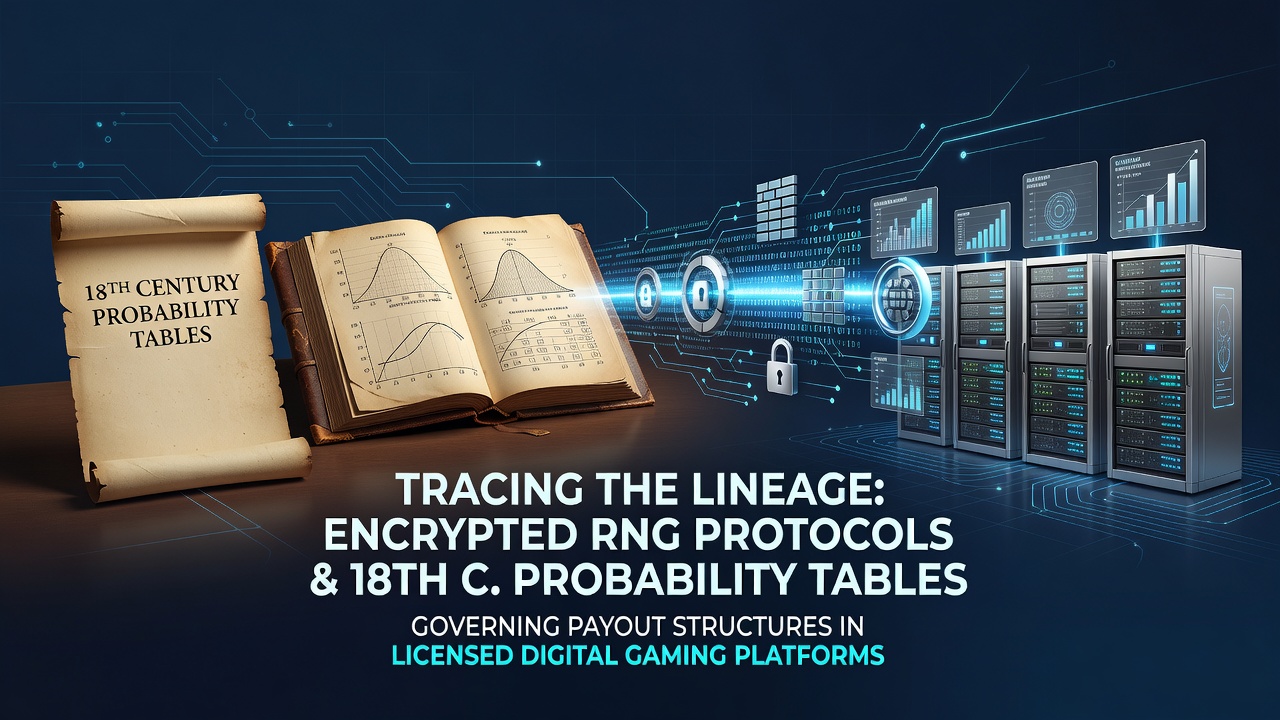
Tracing the Lineage of Encrypted Random Number Protocols and Their Ties to 18th-Century Probability Tables
Probability tables compiled in the 1700s laid out the mathematical foundations that still determine payout percentages across licensed digital gaming platforms today, and encrypted random number generators have simply carried those same ratios forward under cryptographic safeguards. Abraham de Moivre published successive editions of The Doctrine of Chances between 1718 and 1756, and those volumes supplied the earliest systematic calculations of odds for games of chance that later operators adopted when they set house edges. Regulators in multiple jurisdictions continue to require that return-to-player figures match the distributions first derived from those tables, even as the mechanisms that generate outcomes have shifted from printed columns to silicon chips.
Early Tables and Their Direct Influence on Payout Ratios
De Moivre and his contemporaries constructed tables that listed cumulative probabilities for repeated trials, and gaming operators used those entries to fix the proportion of stakes returned to players over long sequences. When mechanical slot machines appeared in the late nineteenth century, manufacturers calibrated reel stops according to the same probability distributions, and that practice transferred unchanged into digital formats once microprocessors replaced physical reels. Licensing authorities still reference these foundational ratios when they certify that a game meets statutory minimum return percentages, which means an 18th-century calculation can dictate the exact frequency of bonus features in a title released in 2026.
Transition from Printed Tables to Algorithmic Generators
By the mid-twentieth century, operators began replacing manual lookup with pseudorandom algorithms that produced sequences statistically indistinguishable from the distributions recorded in the old tables. Early computer-based systems employed linear congruential generators whose output periods and value ranges were tuned to replicate the exact probabilities that de Moivre had tabulated by hand. Gaming commissions in Nevada and New Jersey required independent laboratories to verify that the long-run frequency of each outcome matched the historical tables before any machine received approval for public play.
Encryption Layers Added for Security and Auditability
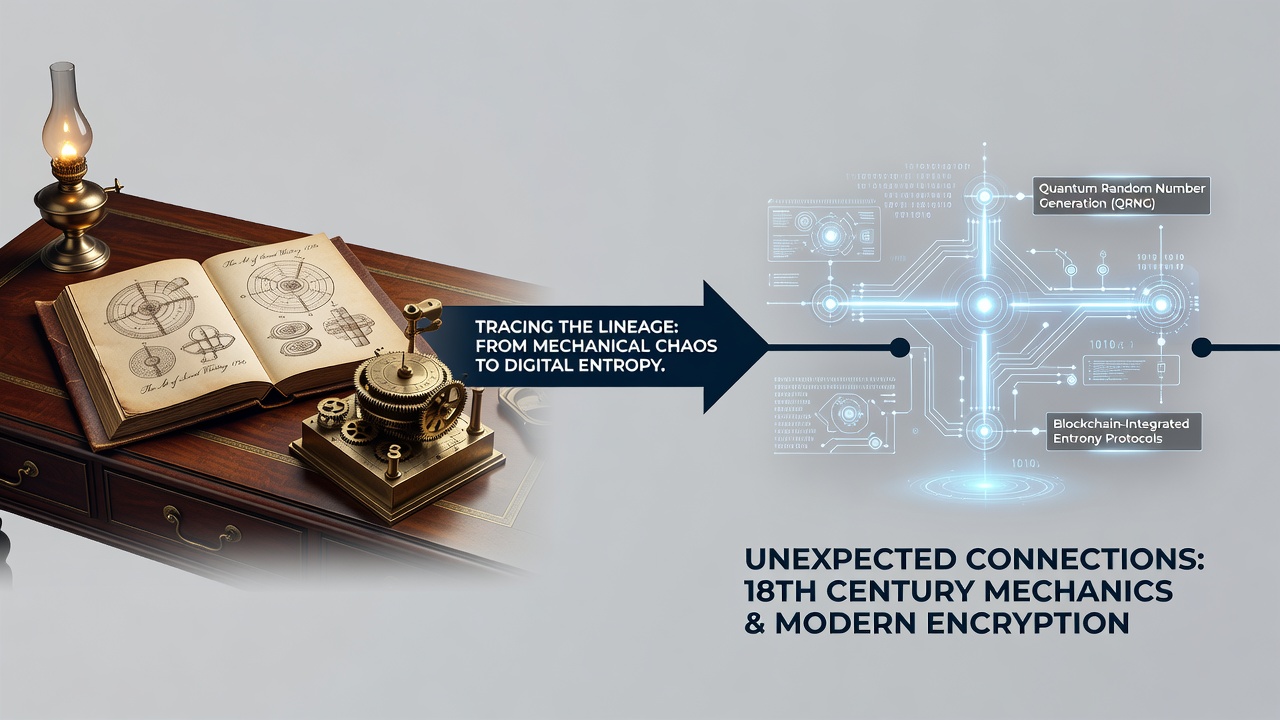
Once online platforms emerged, regulators demanded cryptographic protection so that neither operators nor players could predict or manipulate the next result. Modern certified systems combine entropy sources with encryption standards such as AES-256 to seal the seed values and output streams, yet the underlying probability model remains the one inherited from eighteenth-century calculations. In July 2026 several North American and European licensing bodies are scheduled to complete reviews of post-quantum cryptographic modules, and those reviews continue to test whether the new algorithms preserve the payout structures derived from the original tables.
Regulatory Verification Practices Across Jurisdictions
The Nevada Gaming Control Board maintains a public database of approved random number generator models, and each entry includes statistical test results that confirm adherence to the probability tables first published centuries earlier. Similar documentation appears in records from the Alcohol and Gaming Commission of Ontario and from the Australian Communications and Media Authority, where examiners publish summaries showing that observed frequencies align with the eighteenth-century baselines within accepted tolerance bands. These cross-border verification routines ensure that a licensed slot game in one region delivers the identical long-term payout ratio as its counterpart in another.
Continuous Testing and Table Preservation
Testing laboratories run billions of simulated outcomes through each submitted generator and compare the empirical distribution against the reference tables. Any deviation beyond predefined thresholds triggers rejection or redesign, which keeps the connection between modern encrypted protocols and historical calculations intact. Research institutions such as those affiliated with the National Institute of Standards and Technology have published frameworks that explicitly require preservation of these legacy probability structures when new encryption primitives are introduced.
Implications for Licensed Platforms in 2026 and Beyond
Because payout structures remain anchored to the same tables, changes in encryption technology affect only the security envelope and not the underlying economics of any licensed title. Platform operators therefore focus compliance efforts on demonstrating that their encrypted streams continue to produce results whose aggregate frequencies match the documented distributions. This continuity explains why bonus round frequencies and jackpot odds in contemporary digital environments can be traced, through successive layers of technology, directly back to the printed columns that de Moivre and his peers assembled more than two hundred and fifty years ago.
Conclusion
Encrypted random number protocols in licensed digital gaming platforms operate as secure carriers for probability models that originated in eighteenth-century tables. Regulatory frameworks across multiple continents continue to enforce statistical equivalence between current outputs and those historical distributions, ensuring that payout structures remain consistent regardless of the encryption methods employed. The lineage therefore runs unbroken from handwritten columns through algorithmic generators to present-day cryptographic systems.